
Introdução
Ao pesar legendas vs. dobragem No que diz respeito ao alcance internacional, expandir-se para os mercados globais costumava significar escolher entre dois extremos: a ‘barreira de uma polegada de altura’ das legendas ou os enormes custos de produção dos estúdios de dobragem tradicionais.
Em 2025, essa escolha binária já não existe. A ascensão de dublagem com IA da Agentic introduziu uma terceira opção — que oferece a imersão da dobragem com a rapidez e o perfil de custos da legendagem. No entanto, escolher a opção certa continua a exigir uma compreensão profunda da psicologia do seu público, do seu orçamento e da natureza técnica do seu conteúdo.
Eis o quadro profissional para abordar o debate entre legendagem e dobragem no panorama mediático atual.
1. Legendas: a aposta na autenticidade com boa relação custo-benefício
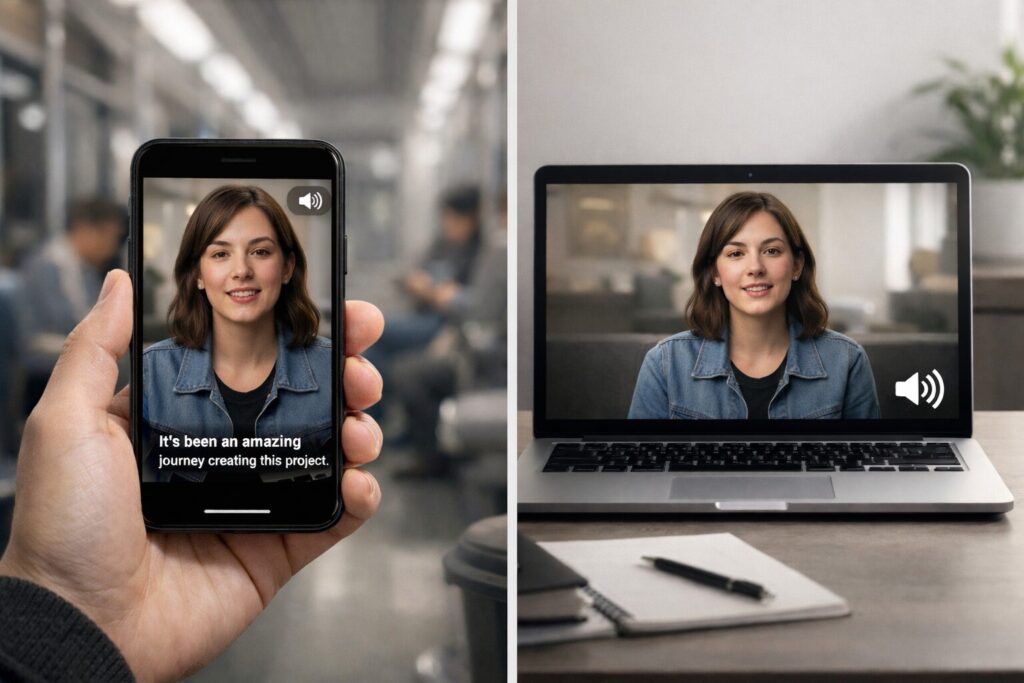
A legendagem (subbing) continua a ser o padrão global para a distribuição rápida de conteúdos. Ao sobrepor texto, mantendo o áudio original, preserva-se a “alma” da interpretação.
Argumentos a favor das legendas
- A autenticidade em primeiro lugar: 84% dos espectadores concordam que as legendas preservam as nuances emocionais originais do ator. Isto é fundamental para filmes independentes, entrevistas e vídeos sobre os fundadores de marcas.
- Prazo de entrega: Na era das redes sociais, a rapidez é fundamental. As legendas podem ser geradas em poucas horas, enquanto a dobragem tradicional demora semanas.
- SEO e metadados: O texto é rastreável. As legendas fornecem contexto aos motores de busca, ajudando o seu vídeo a obter uma boa classificação para palavras-chave localizadas.
- O consumidor “silencioso”: 85% dos vídeos nas redes sociais são vistos sem som. As legendas não servem apenas para traduzir; são essenciais para o envolvimento do público em espaços públicos.
2. Dublagem: A peça de envolvimento imersivo
A dobragem substitui a faixa de áudio original por uma versão localizada. Historicamente, esta era a opção “premium”, reservada ao cinema e à televisão de elevado orçamento. Estudos recentes revelam que 70% do público latino-americano prefere conteúdos dobrados, de acordo com relatórios do setor da Preply
Quando optar pela dobragem em vez da legendagem
- Elevada carga cognitiva: Se o seu vídeo for visualmente denso — pense em tutoriais de software complexos ou em cenas de ação em ritmo acelerado —, as legendas tornam-se uma distração. A dobragem permite que o espectador mantenha os olhos no produto ou na ação.
- Normas do mercado regional: Mercados como Alemanha, França e Espanha são culturas do tipo “dub-first”. Nestas regiões, o conteúdo dublado é o padrão esperado para uma marca profissional.
- Necessidades demográficas: No caso de conteúdos infantis ou de públicos com taxas de alfabetização mais baixas, a dobragem é a única via viável para garantir a acessibilidade.
- Taxas de conclusão: Os dados de marketing sugerem que os vídeos dublados podem atingir até um 24%: taxa de conclusão mais elevada porque exigem menos esforço por parte do espectador.
3. Legendas vs. Dublagem: Uma comparação de custos para fluxos de trabalho modernos
O fator mais importante no debate entre legendagem e dobragem sempre foi a questão financeira. Os métodos tradicionais criavam uma enorme diferença de preços, mas a IA reduziu significativamente essa diferença.
| Métrico | Legendagem | Dublagem tradicional | Dublagem com IA (Vozo) |
| Custo médio | $5–$15 / min | $50–$175 / min | <1 TP4T2 / min |
| Recuperação | 1–2 dias | 2 a 4 semanas | Minutos para horas |
| Recursos | Tradutor + Editor | Estúdio + Locutor + Técnico de som | Plataforma de IA «tudo-em-um» |
| Escalabilidade | Elevado | Baixo | Infinito |
Historicamente, a dobragem era 10 a 15 vezes mais cara do que a legendagem. Hoje em dia, ferramentas como Dublagem com a Vozo AI permitem-lhe colmatar esta lacuna, oferecendo faixas de áudio de alta qualidade a um preço comparável ao da legendagem profissional.
4. The Bridge: Como a IA está a mudar o quadro da localização
Estamos a assistir a uma mudança na forma tradicional de... legendas vs. dobragem uma evolução no sentido de uma estratégia de localização híbrida. As empresas já não optam por um único método e mantêm-se fiéis a ele; recorrem à IA para expandir a sua escala.
Dublagem com sincronização labial de alta qualidade, feita por IA
Uma das críticas tradicionais à dobragem era o efeito do “vale inquietante” — em que os movimentos labiais não correspondiam aos sons. Atualmente, Dublagem com sincronização labial por IA As plataformas, como o Vozo, utilizam modelos próprios, tais como LipREAL™ para alinhar visualmente a boca do orador com a nova língua.
Clonagem de voz e consistência da marca
A dobragem tradicional acabava muitas vezes por perder a personalidade do locutor original. Com dublagem automática de vídeos, agora já é possível clonar a voz do orador original. Isto significa que o seu CEO ou formador principal soa como ele próprio em mais de 110 línguas diferentes, mantendo a autoridade da marca além-fronteiras.
5. Matriz de decisão: qual deve utilizar?
Para tomar a decisão final, analise o seu projeto com base nesta lista de verificação:
Utilize a legenda se:
- Tem um orçamento apertado e precisa de disponibilizar o conteúdo em mais de 10 idiomas rapidamente.
- O teu conteúdo destina-se às redes sociais (TikTok/Reels).
- A voz do ator original é um elemento fundamental da vossa marca.
- Estão a visar regiões “secundárias”, como os países nórdicos ou os EUA.
Utilize a técnica de dublagem se:
- Estão a produzir vídeos de e-learning ou vídeos técnicos de “como fazer”.
- Estão a visar mercados do tipo “dub-first”, como a Alemanha ou a América Latina.
- Queres que a imersão do espectador seja a maior possível.
- Estás a utilizar Dublagem com IA online para manter os custos baixos, sem comprometer a elevada qualidade visual.
Em qualquer cenário de produção, o compromisso em legendas vs. dobragem continua a ser um equilíbrio entre a preservação da interpretação original e a imersão total do público.
O que é melhor para o SEO: legendas ou dobragem?
Porque é que a dobragem é tão mais cara?
Posso usar tanto legendas como dobragem?
A dobragem feita por IA soa robótica?
Expanda o seu alcance global com a Vozo
A escolha entre legendagem e dobragem já não tem de ser um compromisso entre qualidade e custo. Quer necessite de legendas automatizadas precisas ou de uma dobragem com sincronização labial de alta fidelidade através de IA, a Vozo disponibiliza as ferramentas necessárias para localizar o seu conteúdo em grande escala.
Está pronto para ver como o seu conteúdo soa em mais de 110 línguas? Experimente hoje mesmo o Vozo AI Dubbing.